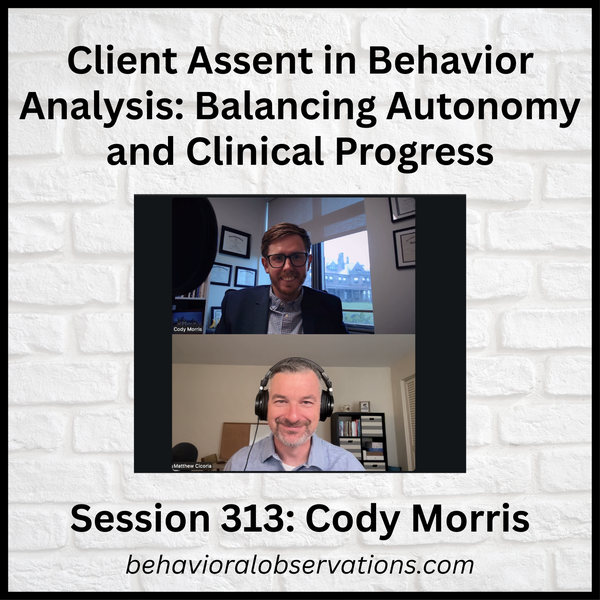
In Session 313, Dr. Cody Morris from Salve Regina University, and the newly re-launched All Things Behavior podcast (please also see The BAPcast Podcast), joins me to dive into a topic that has merited quite a bit of discussion in Applied Behavior Analysis.
These days, you pretty much have to be
living under a rock in ABA circles to not have noticed the increased focus on assent practices in treatment programming.
Cody is one of the preeminent authorities on this topic, and in this episode, we talk about the definitions of assent, how assent has been conceptualized in other fields, and how it applies to the work we do as Behavior Analysts.
In doing so, we review Cody's article, Toward a Further Understanding of Assent, which was published in the winter 2024 issue.
Long story short, if you're looking for a nuanced discussion on this topic that avoids binary, black and white conceptualizations, you've come to the right place.
Here's a deeper dive into what we discussed:
Assent in Behavior Analysis: Cody's
research on assent—a concept similar to consent but applicable to individuals without legal authorization to consent for themselves. Assent involves four critical features: legal status, giving permission, adequate information, and the ability to withdraw permission. This concept is essential for involving clients in therapeutic decisions, particularly those with communication differences or developmental disabilities.
Client Assent in Therapeutic Settings: The discussion
covers the historical roots and practical applications of assent in behavior analysis. Cody clarifies that assent is a specific strategy for involving clients in treatment decisions, not an all-or-nothing requirement. He addresses the challenges of obtaining accurate verbal assent from clients with complex communication needs and recommends using multiple sources of information when assessing client preferences.
Assent Procedures in Research: An examination of assent
procedures in behavior analytic research, including the distinction between free choice and fair choice. The episode explores how researchers and clinicians can minimize undue influence and coercive contingencies while arranging fair choices and creating socially acceptable outcomes.
Balancing Clinical Progress and Client Autonomy: Cody discusses the critical balance between making clinical progress and giving clients independence and autonomy. He explains that while some
procedures are necessary and non-negotiable, there are often opportunities to involve clients in decisions about their treatment, such as choosing the time of day or setting for therapeutic activities or medication management.
Implementing Assent in Practice: The episode addresses nuances and limitations of implementing client assent in behavioral therapy, emphasizing that assent should be balanced with clinical progress. Cody highlights the dangers of overgeneralizing
procedures without individualizing treatment and encourages a broader approach to maximizing client involvement in therapeutic decisions.
Challenges in Assent Assessment: A discussion on the challenges and limitations of developing simplified decision-making tools (like checklists) for assessing client assent. Cody emphasizes the need for nuanced clinical judgment due to insufficient research and recommends that researchers take small, focused steps in studying specific
aspects of assent.
Ethical standards covered:
- 2.09 - Involving Clients and Stakeholders
- 2.11 - Obtaining Informed Consent
- 2.14 - Selecting, Designing, and Implementing Behavior Change Interventions
- 2.16 - Describing Behavior Change Interventions Before Implementation
- 3.01 - Responsibility to Clients